


It all traces back to February 23, 2026, when shares of DoorDash slid 6.6%. No earnings report, no outage, and by gods grace no executive caught doing anything. Someone somewhere on the research firm had a written paragraph.
That paragraph described an economy where AI agents have developed sufficient ability to operate independently. They called this “habitual intermediation” and used DoorDash as the example of it. Essentially, the argument was that DoorDash's moat is that you are hungry, and lazy, and DoorDash happens to sitting on your home screen. An agent, though has got no home screen. It looks DoorDash, then Uber Eats, then the restaurant’s own website, then twenty vibe-coded substitutes and chooses whichever is cheapest. Every time.
This prompted a reply from Andy Fang, DoorDash’s CTO on X.
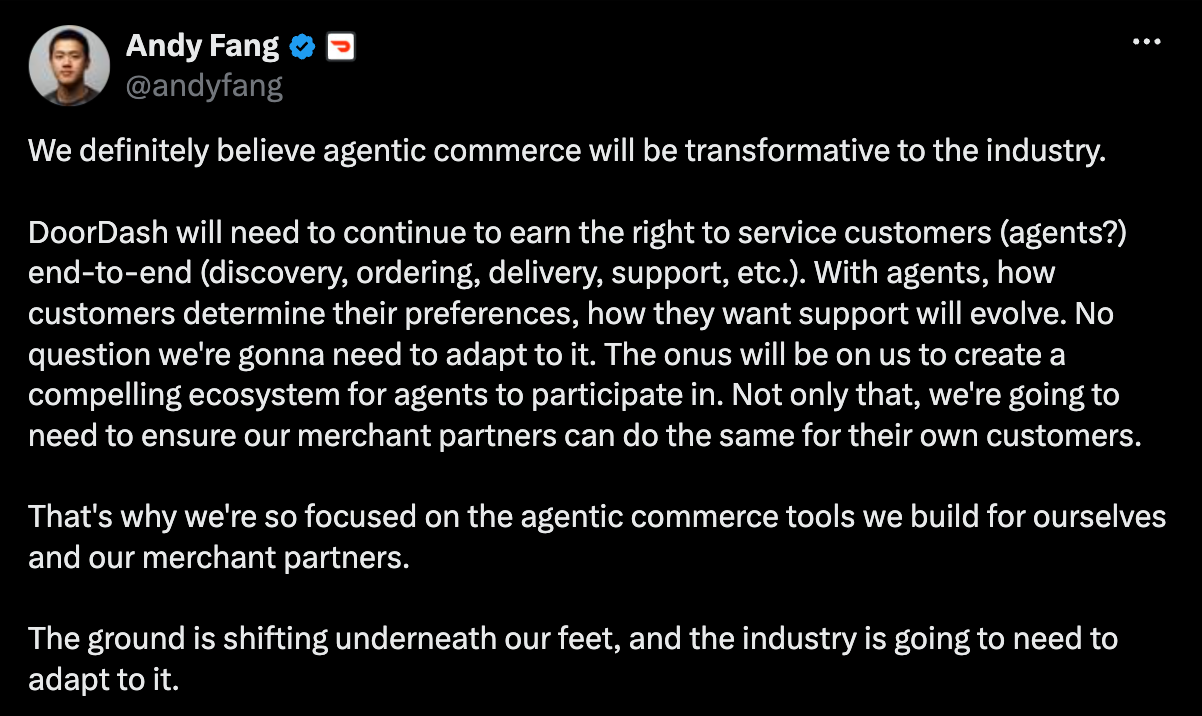
Why give birth to dd-cli?
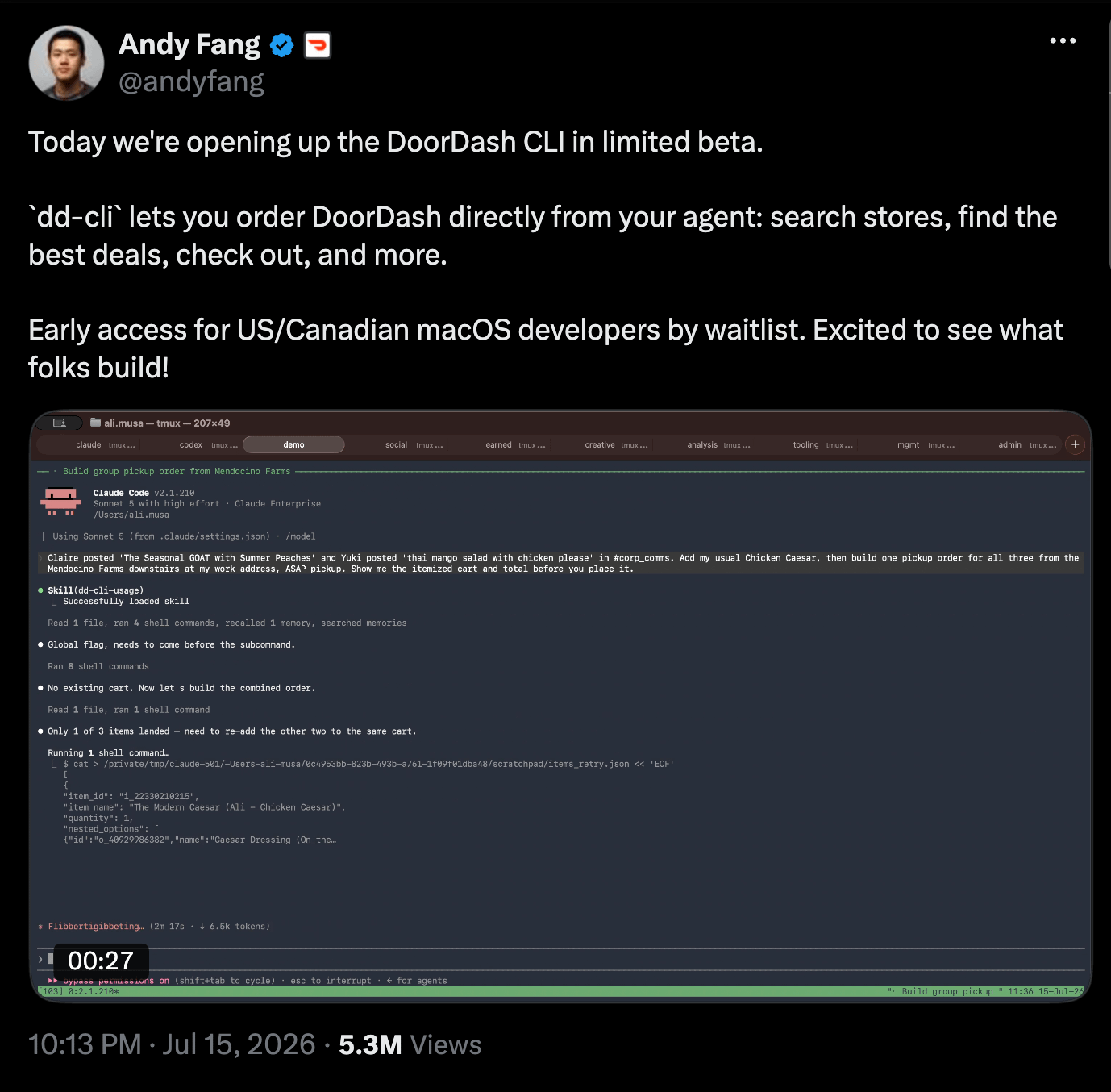
Fang’s next post came five months later, on 15 July. This time with a deliberately humorous demo where an agent reads a message, parses JSON, examines the structure of a restaurant menu JSON response, creates and executes a python script that runs into an error but recovers and produces total. While it is running, the interface says: Flibbertigibbeting.
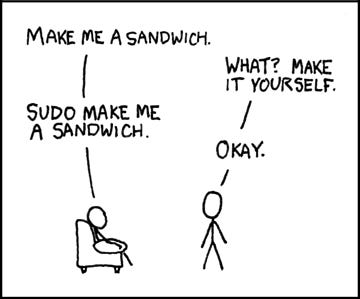
This was almost a reference to the old XKCD comic strip where a programmer issues the command sudo make me a sandwich and receives an OK.
It became an instant sensation on LinkedIn, X, Reddit niches and over lunch tables everywhere. Everyone shared it because command lines deploy code, they don't order lunch. The thing that I find fascinating is DoorDash was already using a Claude connector + ChatGPT integration + an assistant within their own app but they shipped a CLI. Each of them, at least stops and asks a human before any monetary movement occurs. Not the CLI.
DoorDash didn’t remove the confirmation step but instead decided to not build one and pushed the decision onto whoever writes the agent harness.
Infact, Gergely Orosz (Author, the Pragmatic Engineer) said he was surprised, and his logic is hard to dismiss. Food delivery is thin-margin. It survives by owning the customer relationship and selling ads against it. Which is exactly why, these companies never give developers an API.
Is this a real strategic move or a marketing stunt?
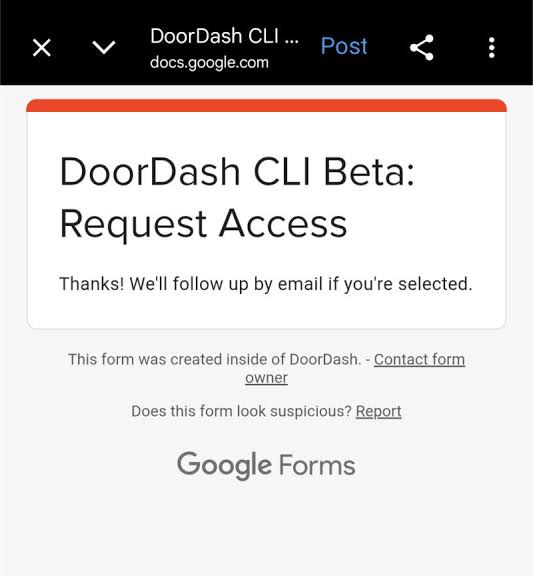
Currently, the beta is only available on macOS and behind a waitlist in the US and Canada. And to access the waitlist you complete a Google Form asking what you’d build with it.
That is not a rounding error on the business. That’s the round-off error on the round-off error. Before shipping, DoorDash surely knew that. Which means it isn’t a growth channel. It’s something else.
DoorDash is acquiring a catalogue of use cases its own org would never have written through the Google Form signup barrier. DoorDash has thousands of years of experience understanding how a hungry human acts, but very little understanding what an autonomous agent does, what it orders, when it fires, if something is out of stock and how it interprets hunger in humans.
The first couple of responses say a lot about who this is for. But not your average consumers, for the hackers who just attach orders to a calendar so an entire meeting room ends up with lunch without anyone remembering to order it. A terminal beats the touchscreen in accessibility workflows. A hungry person opening an app is none of those. That’s the sequence DoorDash is paying to find.
So why a terminal, of all things AI?
Because DoorDash needed something that could bleed money, and a place only a few thousand select people could access. Only a command line does both at once.
In pre-AI era, a CLI isn’t just a strange way to reach consumers but an impossible one. Nobody stumbles into dd-cli. That means no App Store listing, no push notification, no referral link to help you convert into an active user. You need to have a terminal, a package manager, a Mac, an approved slot, and an agent harness running. Which is also why the launch reads like it does. The rest of the flibbertigibbeting and XKCD nod aren’t transparent to the everyday user.
DoorDash also had a ceiling on cash. But you could ask, why would DoorDash build an MCP Server when it groups perform official connectors that browse menus, compare options, construct carts, book tables? Then why build a CLI? And one of the reasons for that is because the MCP server does not buy anything. Person still validates that action, unlike the CLI.
Two agent surfaces divided by who is allowed to spend. With one person giving the order and the other carrying it out. Anyone with Claude can access the assembly surface and DoorDash stops there. They started out with a gate infront of the spend surface (waitlist and platform + manual review), but let you roam free once you gain access.
So one product lesson for us: Read ≠ Write ≠ Spend (they are three different products that have a different blast radius).
How are they going to be measuring success?
DoorDash is unable to track this in the obvious manner. GMV won’t move. Conversion won’t move. Weekly actives won’t move. Every dashboard the company has that explains a funnel after a human is hungry and the orders they are pursuing will not enter into it.
If agents mostly placed orders that you would have placed anyway, DoorDash would be building a pipe that drains off its own ad margin. So that could not be it as well. If they mainly book orders that were never going to happen then its a second business.
That is why success here really looks like a qualitative read of how a few thousand form submissions go, not so much a metric. If that’s not customer research at scale worthy, I don’t know what is!!
What does it costs them?
Open up DoorDash last Halloween and you might have encountered Vampire Kit Kats. Not just a listing, but a full-width video across the top of the homepage. That is prime placement that the Hersheys of this world would shell real cash for.
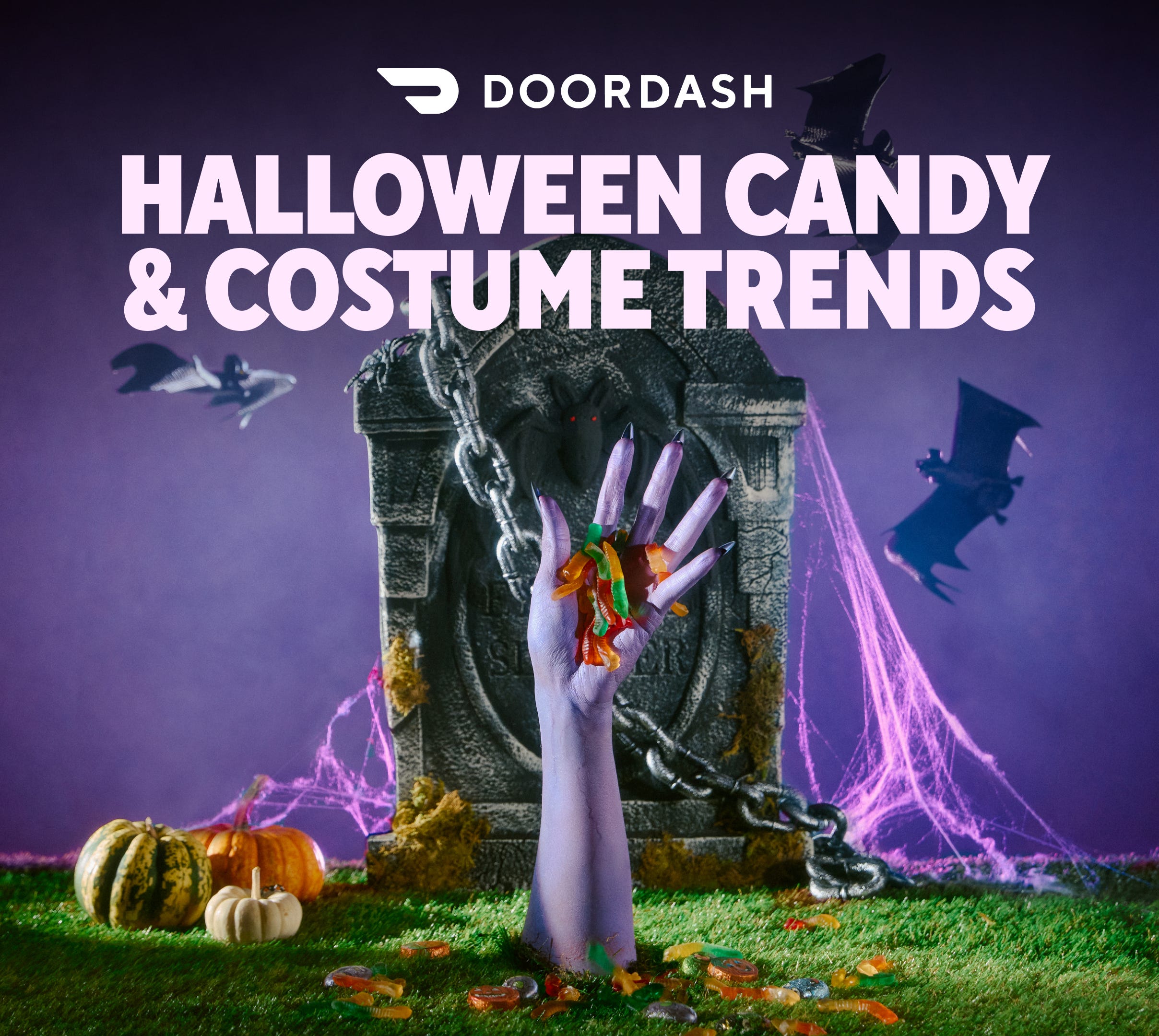
DoorDash sells a lot of those, actually. The ad business reached over a billion dollars annually, carrying over 400,000 advertisers, and is the highest-margin thing they do. The delivery marketplace: pennies moving burritos. And it actually makes money on renting the screen.
And by 2026 DoorDash has aggressively leaned into Spotlight, an experience-native homepage format that effectively strips out display and video while selling on raw visibility. The most agent-invisible product that can be built is an immersive homepage video.
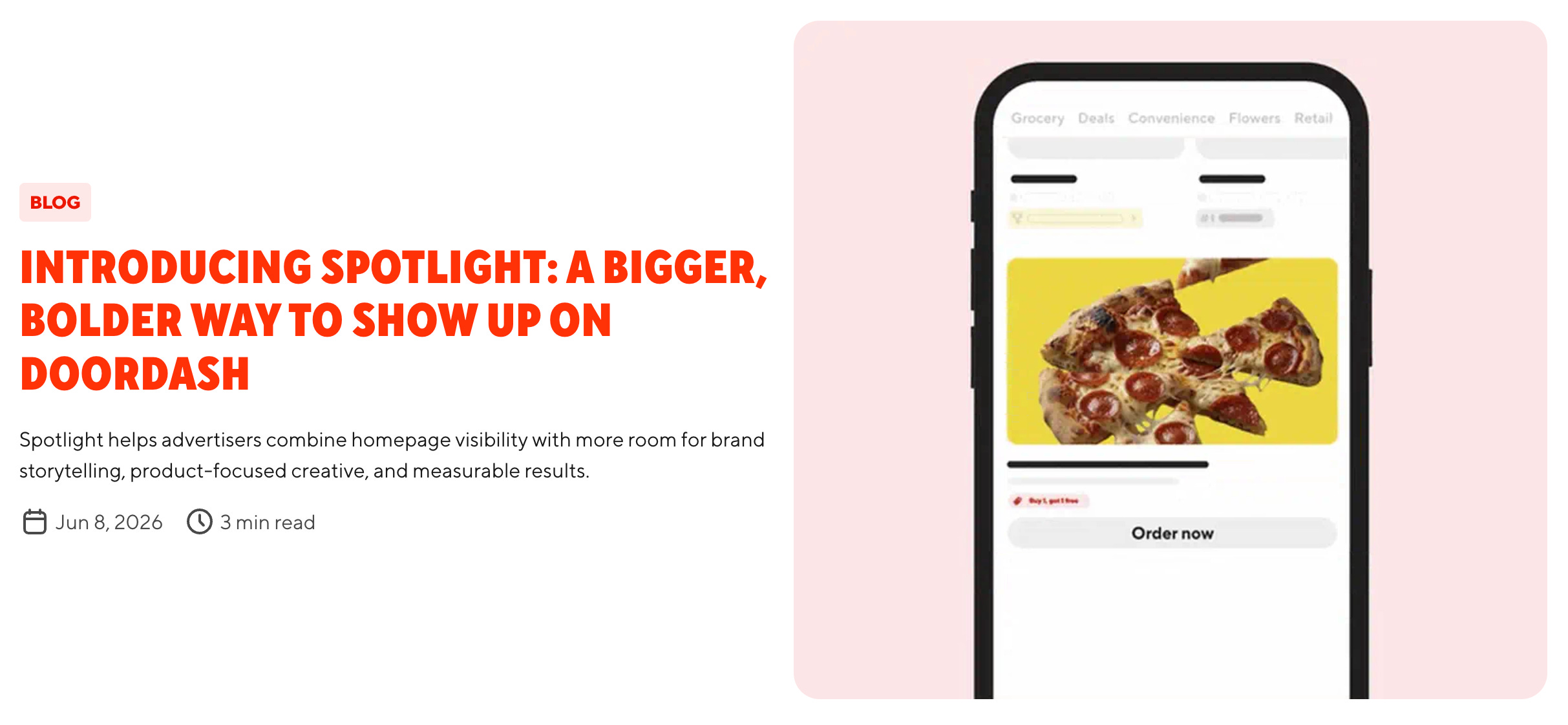
Clearly, one team is investing the most in precisely the surface that other teams tool never loads. That’s not confusion. Two groups that really should be optimizing for two separate futures, but are not. It is important to note that the ad money does not simply disappear when the screen disappears. It moves.
Why UberEats or InstaCart haven’t played this move yet?
Instacart, Uber Eats both shipped a cart assistant. There is Ask DoorDash in the app on DoorDash itself. All of those are an AI layer to keep the customer inside the property.
Structurally, if you examine closely enough, DoorDash is the most exposed of the three. Instacart is a replacement free weekly shop with support from assistant rather than replacement. Because Uber Eats resides in an app that people already use to order rides, even when the process of ordering food becomes automated, the connection stands. DoorDash’s entire business is the impulse tap. When that habit is stripped there’s less beneath than either rival.
And so they have no option but to be bold and try! It’s the only one of the three that has a CTO-Founder leading a new products group. Before we dive in though, I want to make one thing clear: a tool that competes with your own funnel would never survive an actual roadmap review. I’m betting DoorDash had more at stake and a smaller pool of internal players to say no.
So, What happens next?
Agentic Commerce Protocol: DoorDash is a partner here too (with Instacart, Shopify and Etsy) but this one was built on Stripe by OpenAI.
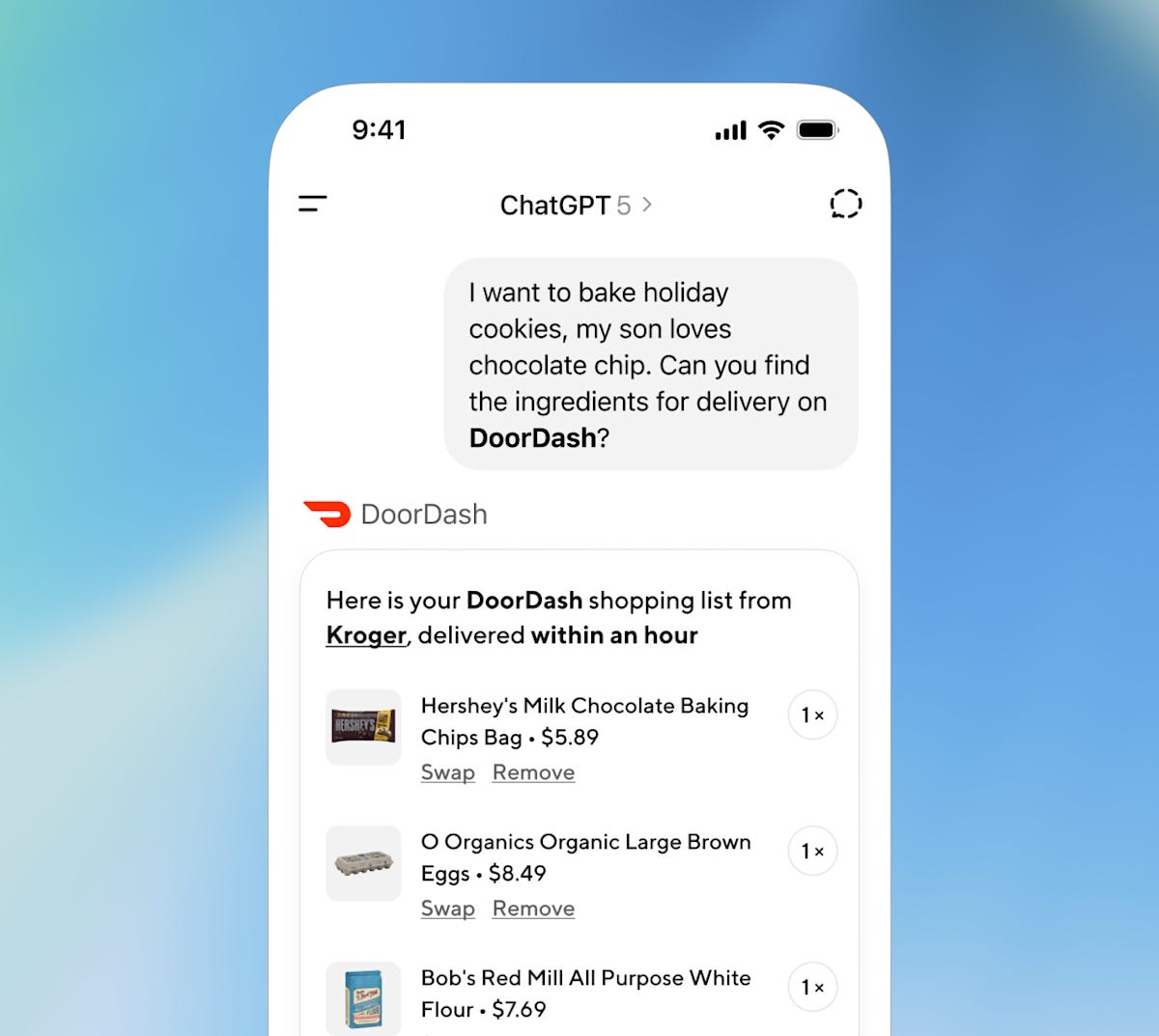
Which means DoorDash is betting on the story that disintermediation has arrived and the only true leverage comes from building, not operating, the interface.
So I think we can make three predictions to keep an eye out for in 2026:
How much DoorDash earns on a CLI order as compared to versus an app order with attached ad impressions.
Whether an ad can exist in a form an agent will respect and whether anybody pays for a placement no human sees.
And if the beta extends wider than macOS. The minute that happens, they have probably hit PMF.
Fang does deliver a keynote at Groceryshop in September on agentic shopping, the next venue any of this may arise. Until then, dd-cli checkout :)